


 OpenAI
 Anthropic







Can AI Replace Your Job?
Not yet — but close enough that pretending nothing is changing would be a mistake. On AI, jobs, and what still requires human judgment.
I spend a lot of time using AI.
Not just casually. I use paid models, local models, coding assistants, design tools, image tools, and automation workflows while building products, websites, and applications. I have seen AI generate interfaces, write code, debug errors, summarize research, create copy, organize ideas, and turn a rough concept into something that looks real in a surprisingly short amount of time.
So when people ask whether AI can replace their job, I do not think the answer is simply “no.”
The honest answer is:
Not yet.
But it is close enough that pretending nothing is changing would be a mistake.
I work in product design and development, two fields that have already been heavily affected by AI. Tasks that once took hours can now take minutes. A person can create a landing page, generate branding ideas, write a basic application, build a working prototype, or get help understanding a technical problem without needing the same budget, team, or experience that would have been required a few years ago.
That is incredible.
It is also uncomfortable.
Because once you see how fast these tools can move, you understand why people are worried. AI does not need lunch breaks. It does not get tired. It can produce endless variations. It can explain things patiently. It can write code faster than most people can type. And in many cases, the first version it gives you is good enough to move forward.
But that is also where the misunderstanding begins.
Generating something vs building something people trust
There is a major difference between generating something and building something people can actually trust.
AI can create a convincing interface. It can write code that appears to work. It can suggest an architecture, generate a database schema, create a marketing plan, write a blog post, or produce a complete-looking app from a prompt.
But a real product is more than a convincing first draft.
A real application needs secure authentication, reliable data handling, accessibility, testing, error handling, deployment, monitoring, backups, privacy considerations, performance optimization, and long-term maintenance.
It needs someone who understands the stack, the framework, the database, the user experience, the business goal, and the risks that come with shipping something into the real world — and someone who can look at what AI produced and ask the questions that actually matter:
- Will this break when real users arrive?
- Is user data protected?
- Does this experience make sense for the person using it?
- Can this be maintained six months from now?
- What happens when something fails?
AI can help answer parts of those questions. It can make the work faster. It can catch mistakes. It can suggest better approaches. But it does not consistently own the consequences of being wrong.
That responsibility still belongs to people.
Tasks first, not jobs overnight
This is why I do not believe most skilled jobs will disappear overnight. AI will not replace entire professions all at once. It will replace tasks first.
It will automate repetitive work. It will speed up research. It will create first drafts. It will reduce busywork. It will help smaller teams produce more. It will allow one person to do things that used to require several people.
That is the real disruption.
The danger is not that AI instantly becomes a perfect replacement for everyone. The danger is that companies may need fewer people to produce the same amount of work, especially in roles where the work is repetitive, predictable, and easy to evaluate.
Threat and tool at the same time
This is already why so many conversations about AI and jobs feel confusing. AI can be both a threat and a tool at the same time. The International Monetary Fund has estimated that nearly 40% of global employment is exposed to AI, with advanced economies facing even higher exposure because they have more cognitive and knowledge-based jobs. But exposure does not always mean replacement. In many roles, AI may complement workers instead of fully replacing them. (IMF)
That distinction matters.
- A designer who knows how to use AI can explore ideas faster.
- A developer who knows how to use AI can debug, prototype, and ship faster.
- A business owner who knows how to use AI can automate repetitive operations.
- A writer who knows how to use AI can move from blank page to edited draft faster.
- A team that knows how to use AI can operate with more leverage than a team that refuses to learn it.
So the people most at risk are not simply designers, developers, writers, support agents, or analysts. The people most at risk are those who do not adapt when the tools around their work change.
Weak expertise gets exposed
AI does not make expertise worthless.
It makes weak expertise easier to expose.
If someone only knows how to follow steps, AI can probably follow those steps too. But if someone understands judgment, taste, context, systems, people, and consequences, AI becomes a multiplier. It helps them move faster, but it does not replace the reason their work is valuable.
AI is expensive
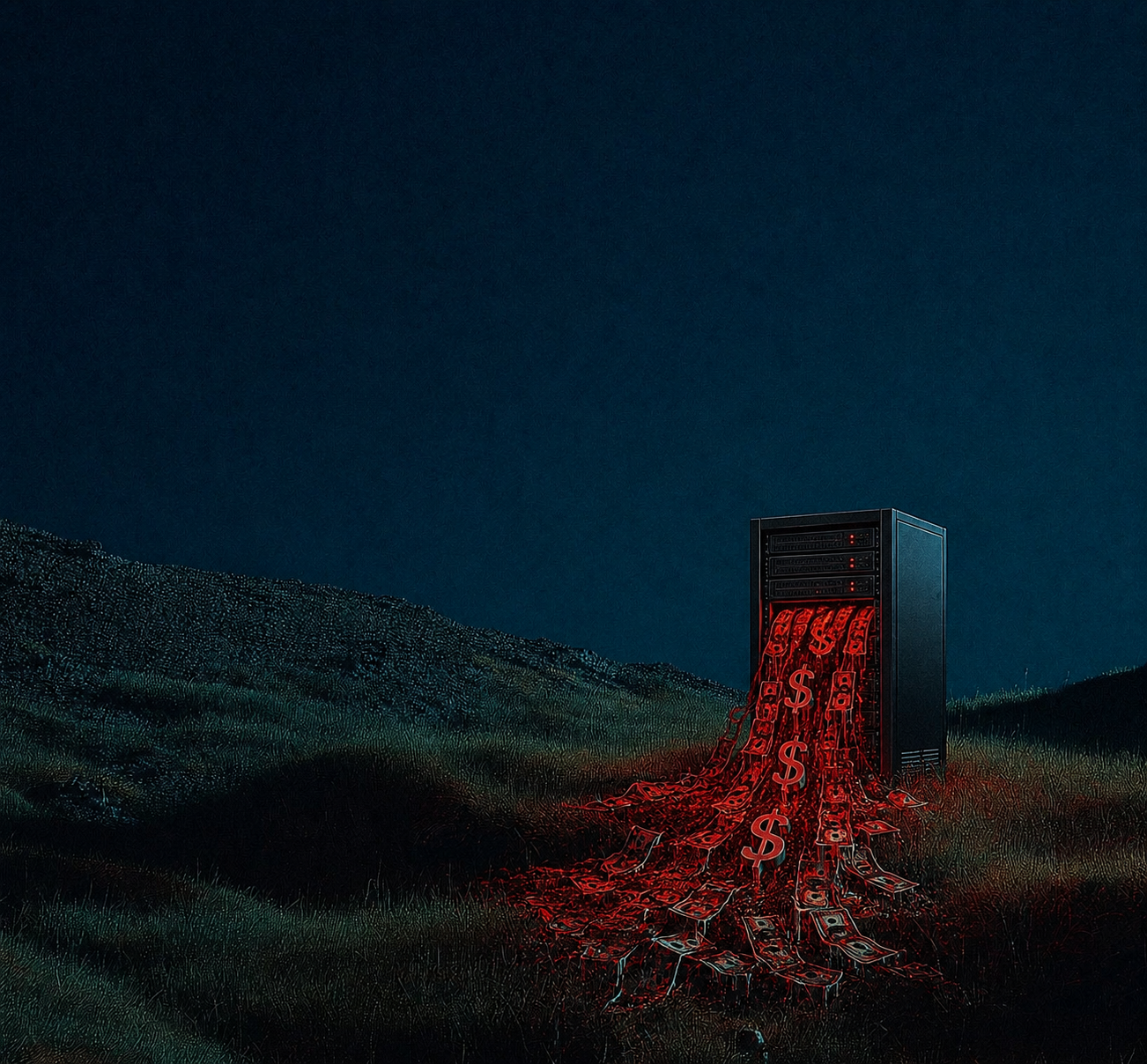
There is another limitation that does not get discussed enough: AI is expensive.
Every AI interaction requires infrastructure. Behind the clean chat box is a massive network of data centers, specialized chips, electricity, cooling, engineering teams, and model-serving systems. The more advanced the model, the more expensive it becomes to run. A simple prompt may be cheap, but an AI agent that reads files, writes code, calls tools, checks its own work, revises its output, and performs multiple steps can consume far more resources.
This matters because replacing people at scale requires more than a model that can produce impressive answers. It requires AI that is reliable, affordable, secure, compliant, available, and trusted enough for companies to hand over meaningful responsibility.
We are not fully there yet.
Research groups are still actively measuring how well AI agents complete longer, real-world tasks. METR, for example, evaluates AI systems by looking at the length of tasks they can complete compared with human experts, which is a useful way to separate short impressive demos from sustained autonomous work.
That gap is important.
AI is very good at producing results that look finished. But professional work is not only about producing something. It is about knowing whether the result is correct, safe, useful, maintainable, and appropriate for the situation.
That is the difference between output and ownership.
A real shift in access
Still, I do not see AI as something to reject. I actually think one of the best parts of this moment is that more people can bring ideas to life. Someone with a good idea can now build a prototype, launch a website, test a business concept, create content, automate a workflow, or design a useful tool without needing tens of thousands of dollars upfront.
That is a real shift in access and opportunity.
AI lowers the barrier to entry. It gives more people the ability to create. It makes technical and creative work feel less locked behind expensive teams, long timelines, or years of experience.
But lowering the barrier to entry does not remove the need for skill.
It changes which skills matter most.
Knowing how to prompt is useful. But prompting alone is not enough. The real value is knowing what to ask for, how to evaluate the answer, what to reject, what to improve, and how to turn the result into something that actually works.
That is where human judgment still matters.
The future we are moving toward
McKinsey & Company has estimated that generative AI could add trillions of dollars in annual economic value by changing how work gets done, especially across customer operations, marketing and sales, software engineering, and research and development. But that value comes from redesigning work around AI, not simply replacing every person with a chatbot.
That is the future I think we are moving toward.
- Not a world where AI instantly replaces everyone.
- A world where work becomes more compressed, more automated, and more competitive.
- A world where one skilled person with AI can do what used to take a small team.
- A world where basic output becomes cheaper, but good judgment becomes more valuable.
So, can AI replace your job?
Maybe not today.
Maybe not completely.
But it can replace parts of your job. It can change how your job is done. It can reduce the number of people needed to do certain kinds of work. And it can absolutely give an advantage to the people who learn how to use it well.
The goal should not be to compete with AI like it is just another person.
The goal should be to become the person who knows how to use it better than the person next to you.
Because AI may not replace every job.
But people who know how to use AI well may replace people who refuse to learn how to work with it.
The question is no longer whether AI is coming.
It is already here.
The real question is whether you are learning how to work with it before someone else does.